
close
Choose Your Site
Global
Social Media
Views: 0 Author: Site Editor Publish Time: 2026-10-15 Origin: Site


Scaling a baby clothing brand hinges directly on your supply chain reliability. Parents demand absolute perfection and safety for their infants. A poorly manufactured garment quickly triggers high return rates, devastating safety recalls, and permanent brand damage. You simply cannot afford unpredictable quality when outfitting newborns and toddlers.
To secure intense brand loyalty, you need production partners who treat safety and durability as non-negotiable standards. This guide shows you how to objectively evaluate a potential baby romper manufacturer before you place a bulk order. You will learn to verify strict compliance certifications and assess precise technical capabilities.
We will also cover how to align production timelines, MOQ constraints, and margin goals efficiently. Let us break down the exact criteria you must check to ensure your next supplier aligns perfectly perfectly your brand values.
Prioritize manufacturers with verifiable compliance certifications (e.g., OEKO-TEX, GOTS, CPSIA).
Assess technical capabilities, specifically regarding fabric GSM consistency, safe hardware application (snaps/zippers), and durable print methods.
Align Minimum Order Quantities (MOQs) and lead times with your current business stage and cash flow.
Always require a "golden sample" to test washability, shrinkage, and seam integrity before bulk production.
The infant apparel market faces some of the strictest regulatory frameworks globally. A single compliance failure can destroy your brand overnight. You must select factory partners who understand and proactively manage these regulations.
First, verify your partner's track record concerning global safety standards. Brands selling in the United States must comply strictly to CPSIA guidelines. European markets demand REACH compliance. Ask the factory for recent third-party lab testing reports. They should easily provide documentation proving their fabrics and hardware meet these rigorous regional requirements.
Chemical residues pose severe risks to delicate infant skin. You must demand proof of material safety. Ask for valid OEKO-TEX Standard 100 certificates. This certification guarantees materials remain free from harmful substances. If you market your brand as organic, require GOTS (Global Organic Textile Standard) documentation. Never accept verbal confirmations. Always verify the certificate numbers directly on the official certification databases.
Modern consumers care deeply about who makes their clothing. Unethical labor practices create massive PR risks. Evaluate the facility’s ethical labor audits carefully. Look for current SMETA or BSCI audit reports. These frameworks ensure responsible supply chain management. They verify fair wages, safe working conditions, and reasonable working hours. Partnering ethically protects your brand reputation and supports sustainable global manufacturing.
Common Mistakes to Avoid:
Accepting expired compliance certificates.
Failing to cross-check factory names against the actual audit documents.
Ignoring the hardware components (zippers/snaps) during compliance checks.
Producing a perfect Baby Romper requires precise material selection. Babies have highly sensitive skin and poor temperature regulation. Your factory must understand advanced fabric dynamics.
Assess their ability to source specific compositions efficiently. Your collections might require 100% organic cotton for ultimate breathability. You might also need bamboo viscose for its extreme stretch and buttery softness. Ribbed knits offer excellent shape recovery for active toddlers. A capable supplier maintains strong relationships across diverse textile mills. They can source these varied materials without causing massive production delays.
Evaluate their technical knowledge regarding fabric weight. GSM dictates the warmth, drape, and durability of the garment. Can they reliably produce lightweight summer outfits without fabric tearing? Do their heavier winter variations suffer from immediate pilling? Ask them to explain their quality control measures for maintaining consistent GSM across different dye lots.
Common Fabric GSM Guidelines for Infant Apparel
Season / Use Case | Recommended GSM | Key Characteristics |
|---|---|---|
High Summer / Tropical | 130 - 150 GSM | Ultra-light, highly breathable, delicate. |
Standard Spring / Summer | 150 - 180 GSM | Good balance of durability and cooling. |
All-Season / Trans-seasonal | 180 - 200 GSM | Standard weight, excellent for layering. |
Winter / Sleepwear | 200 - 240+ GSM | Thicker, retains body heat, resists wear. |
Infant clothes endure constant washing. Inquire deeply about their pre-shrinking processes. Professional factories utilize garment washing or specialized fabric finishing techniques. These steps prevent severe size distortion after the consumer's first home wash. Ask what their maximum shrinkage tolerance is. A standard acceptable rate hovers around 3% to 5% for cotton knits.
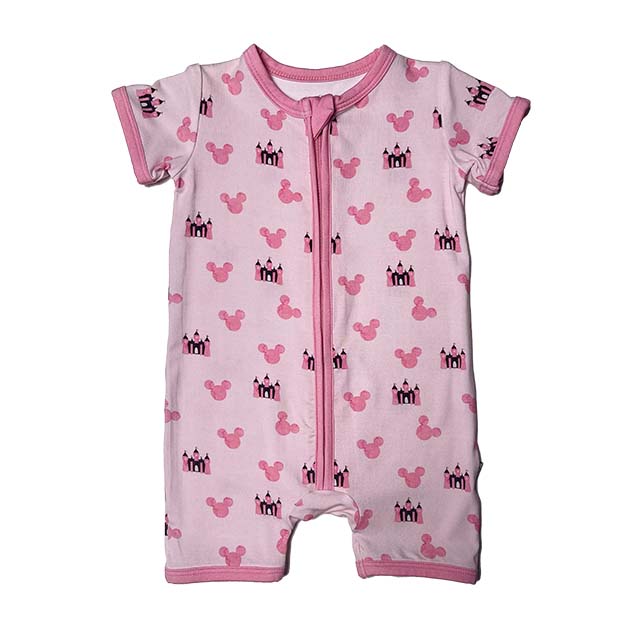
Construction flaws in adult clothing cause annoyance. Construction flaws in baby clothing cause physical harm. Hardware application and seam design define the actual usability of your products.
Hardware presents the biggest choking hazard in infant wear. The manufacturer must use exclusively lead-free and nickel-free snaps. If you use zippers, specify baby-safe brands like YKK. Check their internal pull-test protocols. A reputable factory performs strict tension testing. They typically apply a 15-pound pull force for 10 seconds to ensure snaps remain firmly attached to the fabric. Ask for video proof of this testing if you cannot visit the factory.
If parents struggle during midnight diaper changes, they will not buy your Baby Romper again. Evaluate the factory's ability to seamlessly execute parent-friendly features. These include two-way zippers for quick bottom access. Envelope necklines allow parents to pull the garment down over the shoulders during diaper blowouts. Fold-over mittens prevent newborns from scratching their faces. Test their competency in sewing these specific, tricky features.
Baby skin chafes easily. Look closely at the interior stitching. Demand flatlock stitching or fully covered seams. These techniques lay flat against the skin and eliminate bulky fabric ridges. Check the thread quality. Soft wooly nylon threads provide excellent stretch and softness in the looper seams. A factory cutting costs often uses rigid, cheap polyester threads which cause immediate skin irritation.
Your unique visual identity separates you from generic competitors. The supplier must translate your digital designs into durable, vibrant physical realities.
For brands heavily focused on custom prints, evaluate the factory's printing technology. Babies crawl constantly, subjecting knee and belly areas to intense friction. Ensure they use water-based screen printing for soft-hand feels. For complex multicolor artwork, ask about their digital direct-to-fabric machinery. Test the samples rigorously to guarantee prints will not crack, peel, or fade after heavy laundering.
Assess if they can accurately interpret complex tech packs. Your brand might pivot from modern minimalist solids to intricate, vintage-inspired patterns. Can they execute traditional smocking? Do they understand how to attach delicate ruffles securely? Can they manage safe, backing-covered embroidery? A versatile factory adapts to your evolving design language without requiring constant hand-holding.
Verify their dyeing processes ensure high colorfastness. You do not want a red garment bleeding onto white socks in the washing machine. Request their specific colorfastness ratings. Industry standards usually measure this on a scale of 1 to 5. Aim for a rating of 4 or higher for both wet and dry rubbing. This guarantees the dyes remain stable during messy meals and harsh laundry cycles.
A great product means nothing if the financial and logistical terms crush your cash flow. You need a partner who supports both your current reality and your future growth.
Determine if their MOQs align with your current inventory strategy. Standard factories often ask for 300 to 500 pieces per style, color, and size. This can quickly exhaust a startup's budget. Negotiate MOQ terms upfront. Look for partners offering tiered pricing models. As your brand scales and order volumes increase, your per-unit cost should decrease predictably.
Outline realistic expected timelines immediately. Initial sampling usually takes 2 to 4 weeks. Bulk production typically demands 4 to 8 weeks after sample approval. Factor in ocean or air freight delays. Factories often overpromise to win contracts. Ask them for historical on-time delivery rates. Build a 20% buffer into your product launch calendars to absorb unexpected factory delays.
Ensure their quotes explicitly break down individual costs. You need to see the exact split between raw materials, labor, hardware, and packaging. This transparency allows you to engineer costs out of the product if necessary. Beware of prices appearing "too good to be true." Rock-bottom prices almost always indicate compromised safety testing, toxic dyes, or unethical labor practices.
Never rush into a bulk order. The sampling phase acts as an intense interview process for your shortlisted suppliers. Treat it with extreme rigor.
Start by sending a highly detailed tech pack. Have them sign a Non-Disclosure Agreement (NDA) first. Monitor how they respond. Do they ask intelligent clarifying questions? Do they point out potential construction flaws in your design? A factory asking questions shows engagement. A factory saying "yes" to everything often lacks deep technical comprehension.
Never move to bulk production without formally approving a final Pre-Production Sample (PPS). We call this the "Golden Sample." Use this exact garment to test fit on real babies. Stretch the necklines to test recovery. Wash it five times on high heat to measure shrinkage and print durability. Once approved, the factory must match the bulk production exactly to this Golden Sample.
Confirm whether the facility allows third-party Quality Assurance inspections before final shipment. Reputable agencies like SGS or QIMA can inspect the goods while they still sit on the factory floor. They use AQL (Acceptable Quality Limit) standards to catch defects. If a factory refuses third-party inspections, walk away immediately. Tie your final balance payment to a passing QC report.
Actionable Steps for Quality Control:
Define your specific AQL tolerance (e.g., AQL 2.5 for major defects).
Provide the inspection agency with your approved Golden Sample.
Detail specific pull tests for snaps in your inspection booking.
Review the final report before authorizing the remaining 70% payment.
Choosing the right manufacturer is the most critical decision your apparel brand will make. A skilled factory acts as a strategic partner, not just a simple vendor. They protect your brand equity by ensuring every stitch meets rigorous safety protocols. They help you scale by offering flexible MOQs and consistent lead times.
Begin by auditing your current suppliers against the compliance and technical metrics outlined above. Demand transparency regarding fabric GSM, hardware safety, and ethical labor practices. If your current partners fall short, it is time to pivot. Take control of your supply chain today. Reach out to verified specialists to request a custom manufacturing consultation and start building safer, better garments for your customers.
A: The ideal GSM depends entirely on the season. For hot summer months, prioritize breathability with lightweight fabrics between 150-180 GSM. For winter or cooler climates, you need materials providing warmth and thickness, typically ranging from 200 to 220+ GSM. Transitional seasons do well with 180-200 GSM.
A: You must demand valid, up-to-date third-party lab testing certificates directly from the factory. They should provide OEKO-TEX or GOTS certificates for fabrics, and compliance reports for CPSIA or REACH standards. Always verify these documents independently to ensure both fabrics and hardware are entirely free from toxins and choking hazards.
A: Standard B2B expectations typically range from 300 to 1,000 pieces per style and color. This heavily depends on the factory's scale, machinery, and your specific customization requirements. Specialized fabrics or custom prints generally push MOQs higher, while standard solid colors might allow for lower minimums.
A: While some full-package (FOB) manufacturers do offer internal design and drafting services, we highly recommend finalizing your own tech pack independently. Creating it yourself ensures you retain complete intellectual property control over critical details like sizing, fit grading, hardware placement, and specific seam construction.


