
close
Choose Your Site
Global
Social Media
Views: 0 Author: Site Editor Publish Time: 2026-10-11 Origin: Site


Summer heat brings immense joy, but it often triggers a core parental anxiety. Infants struggle to regulate their own body temperature during the hotter months. This physiological reality makes extreme summer heat a significant risk for dangerous overheating and uncomfortable heat rash. Choosing the right outfit goes far beyond cute patterns and aesthetics. It requires a careful balance of breathability, durability, and highly practical design. You need quick diaper access without compromising your infant's everyday comfort. This article offers an evidence-based evaluation of infant clothing materials and their distinct properties. We will explore how different fibers interact directly with delicate newborn skin. Read on to discover which summer baby romper options keep your little one cool, safe, and happy all season long.
Babies cannot regulate temperature efficiently; fabric choice directly impacts health and comfort.
Top summer baby romper fabric options include bamboo viscose (for cooling), organic cotton muslin (for airflow), and linen blends (for lightweight structure).
Avoid synthetic materials like polyester that trap moisture and heat against delicate skin.
When evaluating a baby romper, assess stretch recovery for easy diaper changes and factor in natural fabric shrinkage during washing.
Infants experience the world differently than adults. Their thermoregulation system remains highly immature during the first year of life. Babies possess a higher body-surface-area to mass ratio. They absorb environmental heat much faster than adults do. Furthermore, their sweat glands do not function efficiently yet. They cannot cool themselves down through heavy perspiration. This biological fact makes breathable fabrics a critical safety necessity. Good airflow is never just a luxury. It acts as a primary defense against hyperthermia.
Parents often confuse clothing terminology. We must clarify the difference between rompers, creepers, and bodysuits. A true romper integrates shorts or pants into a single cohesive garment. This design hangs loosely over the body. It eliminates tight waistbands and allows vital air circulation. In contrast, creepers and bodysuits fit tightly against the torso. Parents often layer these tight garments under separate pants. This layering creates a sealed environment. It traps excess body heat around the baby's vital organs.
Understanding the moisture-wicking mandate helps you choose better clothing. Many fabrics absorb sweat like a standard kitchen sponge. They hold the water and stay continually wet against the skin. Wet fabric increases friction and causes irritation. Wicking fabrics function entirely differently. They actively pull moisture away from the epidermis. They push this moisture to the outer surface for rapid evaporation. This mechanism keeps your baby perfectly dry.
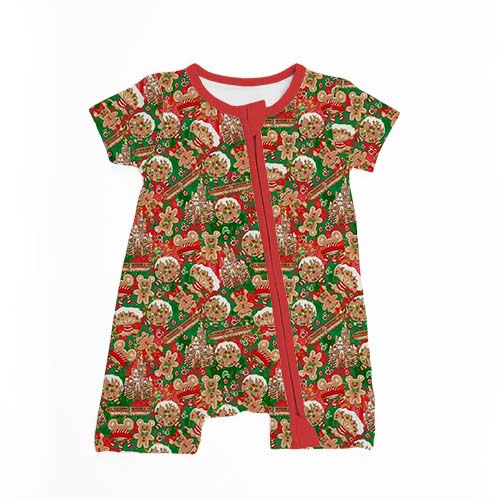
Bamboo viscose dominates the modern infant clothing market. The manufacturing process creates a highly porous micro-structure within the fibers. This unique structure allows for exceptional heat dumping. It also provides excellent moisture wicking capabilities.
Pros: The fabric feels incredibly cool to the touch. It offers a buttery soft texture. High stretch characteristics make dressing squirmy infants remarkably easy.
Cons: Bamboo fibers hold onto water during washing. The garment can take much longer to line-dry. The soft fibers remain prone to pilling if you wash them aggressively.
Muslin stands as a historical favorite for hot climates. Manufacturers use an open-weave construction to produce this textile. This distinct weave maximizes natural airflow across the baby's skin.
Pros: Muslin is a highly durable material. It withstands high-temperature washing easily. Organic cotton remains naturally hypoallergenic for sensitive newborn skin.
Cons: Muslin provides minimal innate stretch. Standard tightly woven cotton retains moisture heavily. Heavy sweating leaves the garment feeling wet and heavy.
Linen originates from flax fibers. These hollow fibers naturally release trapped heat into the air. Pure linen feels slightly rough, so blending it with cotton adds essential softness.
Pros: The rigid structure means it does not cling to the skin. This significantly improves overall airflow. Linen blends are highly durable for active outdoor play.
Cons: The fabric wrinkles very easily. It offers virtually zero stretch. This rigidity requires careful sizing to ensure the baby can move freely.
Summer Fabric Comparison Guide
Fabric Type | Primary Benefit | Stretch Level | Best Use Case |
|---|---|---|---|
Bamboo Viscose | Cooling & Moisture Wicking | High | Peak heat days, sleepwear, indoor play. |
Organic Cotton Muslin | Maximum Airflow | Low | Rugged daytime play, beach outings. |
Linen-Cotton Blend | Non-clinging Structure | Zero to Minimal | Structured outings, family photos, dry heat. |
Parents often seek maximum UV protection during summer. This desire creates a difficult trade-off between weave density and breathability. High UPF ratings require incredibly tight fabric weaves. Unfortunately, tight weaves trap excessive body heat. We recommend a balanced approach. Rely on shade, stroller canopies, or baby-safe sunscreen for primary skin protection. Use open weaves primarily for cooling the infant. Comfort usually outweighs minor textile sun protection during peak heat.
Summer sweat increases skin friction dramatically. Fabric texture interacts directly with common infantile conditions like eczema or heat rash. Rough textiles create microscopic abrasions on wet skin. Smooth fibers reduce these harmful micro-abrasions significantly. Bamboo and combed cotton excel in this specific area. Finding the right baby romper fabric minimizes severe skin irritation. It keeps existing rashes from worsening during humid afternoons.
The diaper change test remains a crucial evaluation metric. Rigid fabrics require complex hardware to open fully. You often need multiple snaps or stiff button closures. High-stretch fabrics behave differently. Spandex-blended cotton or bamboo recovers its shape quickly. You can stretch the neck or leg openings wide. This flexibility enables fast, stress-free diaper changes. You spend less time wrestling with fabric and more time enjoying summer.
The synthetic trap catches many well-meaning parents. Brands often blend polyester, nylon, and acrylic into cheap infant clothing. You must explicitly avoid these synthetic blends during summer months. They possess a plastic-like chemical structure. They trap heat heavily against the body. They completely lack natural breathability. They create a dangerous greenhouse effect around your baby. This trapped heat leads directly to severe heat rash.
You must also anticipate shrinkage realities. Fully natural fibers always shrink after their initial wash. Pure cotton and linen contract when exposed to warm water. We highly advise sizing up for summer wardrobes. A slightly larger garment guarantees a loose fit. A loose fit maintains an airy, ventilated environment. The garment remains perfectly comfortable even after its first trip through the laundry cycle.
Hardware and dyes present hidden dangers outdoors. Heavy metal snaps heat up very quickly in direct sunlight. They can burn delicate skin upon contact. Dark dyes absorb intense solar heat rapidly. A black or navy outfit becomes a thermal liability. We strongly recommend lighter pastel shades. Neutral colorways remain noticeably cooler outdoors. Covered zippers always work better than fully exposed metal closures.
Navigating the baby clothing aisle requires a systematic approach. Use this simple buyer's checklist to evaluate your next purchase.
Check the Tag: Ensure proper material composition first. Aim for at least 95% natural or semi-synthetic fibers. Look specifically for cotton, bamboo, modal, or linen. Avoid any garments listing polyester as a primary or secondary ingredient.
Assess the Cut: Visual design impacts airflow directly. Look for wide leg openings. Prioritize sleeveless or short-sleeve designs. A gusseted crotch accommodates bulky diapers comfortably. These design choices guarantee maximum ventilation across the torso.
Verify the Closures: Rapid access is absolutely crucial. Prioritize two-way zippers. Ensure they feature interior zipper guards to protect the skin. Nickel-free crotch snaps offer safe, quick access. A properly designed Baby Romper utilizes these smart, baby-safe closures.
Choosing the absolute best fabric depends entirely on your specific use case. Bamboo viscose dominates peak heat scenarios and nap times due to its cooling stretch. Muslin excels during rugged daytime play because it breathes so well. Linen-cotton blends suit structured outings where you want a durable, stylish look.
Prioritizing a loose fit matters more than anything else. Using lightweight, breathable fabrics is the most effective way to keep an infant safe. Careful material selection prevents summer discomfort entirely. Start checking your baby's wardrobe tags today. Pack away the synthetics and invest in high-quality, airy essentials for the hotter months.
A: Yes. Bamboo viscose features a porous micro-structure. It conducts heat away from the body faster than standard cotton. It also wicks moisture exceptionally well. This rapid evaporation creates a noticeable cooling effect on the baby's skin.
A: Sizing up offers a dual benefit. First, it accounts for the natural shrinkage found in natural fibers like cotton and linen. Second, a looser garment allows vital air circulation, which prevents dangerous overheating and painful heat rash.
A: Absolutely. Modal functions similarly to bamboo viscose. It is a highly breathable, semi-synthetic rayon made from beech tree pulp. It remains incredibly soft, absorbs moisture well, and serves as an excellent option for humid summer weather.
A: Always wash delicate summer fabrics using cold water. Use a gentle cycle with mild detergent. To prevent shrinkage, either tumble dry on the lowest possible heat setting or hang the garments on a line to air dry.


