
close
Choose Your Site
Global
Social Media
Views: 0 Author: Site Editor Publish Time: 2026-08-31 Origin: Site


Selecting nursery bedding extends far beyond simple aesthetics. Parents often view these linens as mere decorative additions. In reality, choosing the correct fit is a critical safety and compliance decision. A poorly fitted layer creates immediate risks in an infant's sleep environment. Dangerous bunching or sudden corner pop-offs can quickly introduce severe suffocation hazards. You need absolute measurement precision to maintain a perfectly secure sleep space. Understanding standard dimensions protects your baby and significantly simplifies your daily routine.
This guide explores the exact dimensions required for optimal infant safety. You will learn how to evaluate elastic tension and measure mattress pocket depths properly. We will also cover why breathable materials matter immensely. Finally, we will outline how to build a reliable laundry rotation strategy. Let us examine the precise measurements required for safe sleep.
The US Consumer Product Safety Commission (CPSC) sets strict mandates for infant sleep environments. By law, standard infant mattresses must measure at least 27.25 inches wide and 51.25 inches long. This regulation prevents dangerous gaps between the mattress and the wooden frame. To accommodate this block securely, a standard crib sheet is cut to exactly 28 by 52 inches. This precise sizing ensures a drum-tight fit over the mattress corners. Manufacturers design them this way to eliminate loose fabric. Loose material poses an immediate suffocation hazard to rolling infants.
Experts recommend a simple validation method called the pinch test. Once you secure the fabric over the mattress, try to pinch the material in the exact center. A properly sized cover will not allow any loose fabric to be pulled up. You should feel immense tension pulling the fabric flat against the mattress surface. If you can gather extra material in your fist, the sizing is incorrect. Pediatricians enforce a strict zero-tolerance policy for slack in infant sleep spaces. The surface must remain perfectly smooth regardless of how much the baby moves.
You should also consider the extended lifecycle of these items. Standard mattresses seamlessly transition into standard toddler beds. This overlap means your carefully selected linens offer substantial long-term value. You will continue using the exact same bedding dimensions well into your child’s toddler years. A well-constructed item purchased for a newborn will comfortably cover a toddler bed three years later.
Most parents focus solely on surface width and length. However, mattress thickness varies significantly across different brands. Standard infant mattresses range from ultra-thin breathable foam cores to traditional innersprings. A firm foam core might measure only four inches thick. A premium double-sided innerspring model often reaches up to six inches in depth. You must measure the exact depth of your specific mattress. Bedding must accommodate these physical depths without overstretching or resting too loosely. Inadequate pocket depth causes the corners to ride up the mattress sides over time.
Elastic quality serves as another critical, yet frequently overlooked, safety variable. Older or budget-tier designs often feature corner-only elastic bands. These fragmented bands degrade quickly in the wash. They frequently snap off or lose elasticity under pressure. Instead, you should always choose 360-degree fully encased elastic. This modern standard features a continuous band looping around the entire perimeter securely. The encased design grips the mattress underside firmly. It distributes tension evenly across all four edges, minimizing the risk of a dangerous corner pop-off.
You must also factor in natural fabric behavior. Sizing alterations often occur post-wash. High-quality manufacturers anticipate this biological reality. They cut their textiles slightly larger during the initial manufacturing process. This smart design accommodates first-wash shrinkage. The oversized cut shrinks down perfectly to maintain necessary surface tension long-term. Always wash your bedding before the first use. This critical step achieves the true, permanent size before the baby ever sleeps on it.
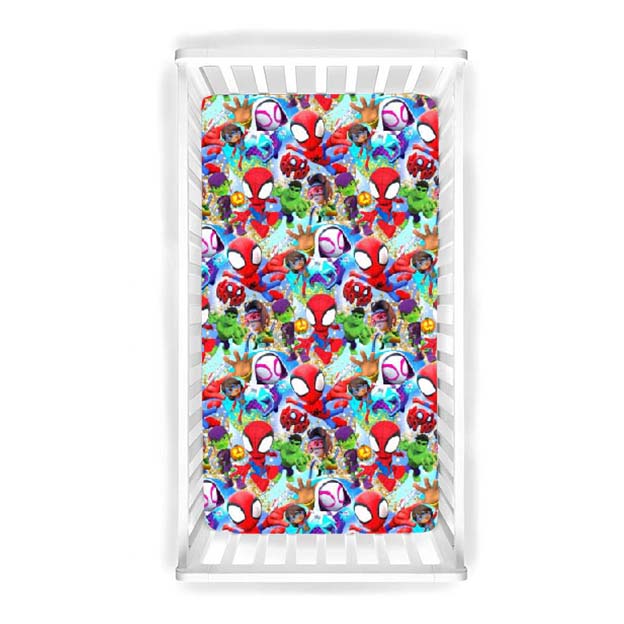
Caregivers frequently confuse different infant bed categories. Mixing up standard sizes with mini versions introduces severe hazards. You need a clear understanding of the dimensional differences between product categories. Mini models often share similar aesthetic designs but feature vastly smaller footprints.
| Bed Category | Width | Length | Primary Use Case |
|---|---|---|---|
| Standard Crib | 28 inches | 52 inches | Primary home nursery |
| Mini Crib | 24 inches | 38 inches | Small apartments, grandparents' homes |
| Pack 'n Play | ~25.5 inches | ~37.5 inches | Travel, temporary daytime sleep |
The implementation risk is exceptionally high when matching bedding to smaller frames. Never use standard-sized covers on mini cribs or playards. Many caregivers mistakenly believe they can simply fold excess fabric underneath the smaller mattress. This dangerous practice violates all established safe sleep guidelines. A restless baby can easily dislodge tucked fabric. They will pull it loose into their immediate sleep space. Loose fabric bundles act as a primary suffocation risk.
Shortlisting the right product requires precise logic. Do not rely solely on the marketing label printed on the furniture box. Some brands use non-standard phrasing like "compact" or "apartment-sized." Instead, take a physical tape measure directly to your bare mattress. Measure the width, length, and depth directly before purchasing anything. Exact physical measurements always trump generic brand labels when baby safety is involved.
Infants possess highly immature nervous systems. They simply cannot regulate their own body temperature efficiently. This physiological limitation makes material selection vital for comfortable, secure rest. A 100% cotton crib sheet serves as the strict industry baseline. Cotton is naturally hydrophilic. It wicks moisture and traps heat far better than synthetic microfibers or polyester blends. Natural fibers allow delicate skin to breathe effortlessly. This airflow minimizes the risk of dangerous overheating, a known risk factor in infant sleep safety.
Durability under extreme duress is equally crucial for nursery linens. Baby bedding faces frequent, high-heat sanitizing washes. Nighttime blowouts, spilled milk, and winter illnesses demand rigorous cleaning routines. High-quality cotton withstands these extreme washing conditions beautifully. It resists rapid fiber degradation and annoying pilling over time. Synthetic alternatives often melt, pill, or lose elastic tension after just a few hot water cycles. You need a fabric capable of surviving daily abuse.
Finally, always prioritize compliance and independent textile certifications. Look closely for verifications like OEKO-TEX Standard 100 or the Global Organic Textile Standard (GOTS). The manufacturing process for cheaper textiles often utilizes harsh chemicals. Strict certifications guarantee the final fabric remains entirely free from volatile organic compounds (VOCs). They also ensure zero heavy metals touch your baby’s skin. Certified natural fibers provide ultimate peace of mind. You can trust they will not trigger respiratory irritation or contact dermatitis.
Buying the correct size represents only the first step. You must also determine the optimal inventory volume for your household. A practical, stress-free rotation requires a strict three-sheet minimum. You need one actively in use on the mattress. You need a second one circulating in the wash. The third acts as your emergency reserve for middle-of-the-night accidents. This baseline framework handles unexpected messes effortlessly. It protects you from forcing immediate laundry demands at three in the morning.
External requirements often dictate additional inventory needs. If your child attends a commercial daycare facility, factor their rules into your total count. Daycares typically require parents to provide one or two dedicated standard covers. These items usually remain on-site permanently or cycle home weekly for cleaning. You must buy extras to fulfill this requirement without depleting your home rotation. Always label your daycare linens clearly using permanent fabric markers.
Experienced parents often utilize a specific layering strategy to maximize sleep. Here is the highly recommended pro-tip method for instantaneous nighttime cleanups:
This clever sequencing allows caregivers to strip soiled bedding in seconds. You simply pull off the top two layers during a messy blowout. A clean, perfectly fitted bed awaits directly underneath. This highly efficient strategy dictates purchasing your linens in identical sets of two or more.
Finalizing your nursery bedding setup requires strict adherence to safety standards over aesthetic preferences. Your choices directly impact the structural integrity of your baby's sleep environment. Keep these actionable next steps in mind as you complete your purchase.
Before you add a single item to your online cart, grab a tape measure. Accurately measure your current mattress depth. This quick, five-minute step prevents hazardous sizing mismatches. It guarantees a safe, secure, and tightly fitted rest space for your infant.
A: Yes, natural fibers inherently shrink when first exposed to heat and water. High-quality brands pre-shrink their fabrics or cut them slightly larger. Proper care dictates washing on cold and tumble-drying on low heat. This routine minimizes dramatic shrinkage and preserves crucial elastic tension over time.
A: Yes, absolutely. Standard infant mattresses and toddler mattresses share the exact same 28 by 52-inch dimensions. This sizing overlap means your initial bedding investment offers excellent longevity. You can safely transition your fitted linens directly onto a standard toddler frame.
A: Thread count is mostly a marketing myth for infant bedding. Focus on the weave type and fiber quality instead. Percale weaves offer crisp breathability, while sateen provides a softer drape. High breathability matters far more for infant thermal regulation than sheer thread density.
A: Corner pop-offs usually indicate inadequate pocket depth or degraded elastic bands. If your mattress is six inches thick, a four-inch pocket cover will continually slip. Always check your mattress depth and insist on continuous, 360-degree encased elastic. Loose bedding creates severe suffocation risks.


