
Views: 0 Author: Site Editor Publish Time: 2026-05-22 Origin: Site


Age 5 marks a notoriously difficult transitional phase in children's clothing. Parents and gift-buyers constantly face a frustrating sizing intersection. You must choose between the top end of Toddler sizes (5T) and the entry point of Youth sizes (Youth XS or Small). Buying a kids Hoodie online without a fitting room introduces real friction. Getting the fit wrong costs you time and money. You deal with the hassle of physical returns. Alternatively, the child outgrows the garment in mere months. We want to eliminate this guesswork entirely. This comprehensive guide provides a verified, data-driven framework. We separate physical body measurements from flat garment specifications. You can confidently select the right fit based on height, weight, and brand variance. You will learn exactly how to measure effectively and make smart purchasing decisions.
The Sizing Cusp: Most 5-year-olds straddle 5T (Toddler) and Youth XS (Size 4/5).
Primary Metric: Height and weight are significantly more reliable indicators than age tags.
The Lay-Flat Rule: Comparing a child's current best-fitting sweatshirt to a brand's flat garment measurements is the most accurate way to prevent returns.
Growth Buffer: Because hoodies are layered outerwear, sizing up (e.g., leaning toward Youth XS over 5T) usually provides the best ROI for growing children.
Apparel manufacturers use different base templates to cut fabric. The industry calls these templates blocks. A toddler block caters specifically to early childhood body shapes. A youth block anticipates older children's changing proportions. This critical structural shift happens right around age 5. You must understand this difference to secure a proper fit.
Designers build 5T garments with a slightly wider midsection. This extra width accommodates baby fat or residual toddler proportions comfortably. Length-wise, a 5T typically caps at around 44 inches in overall child height. The sleeves and torso remain relatively short. The neck opening often runs a bit smaller. This prevents the collar from sliding off narrow toddler shoulders.
As children slim down and stretch out, manufacturers pivot to Youth XS. Brands sometimes label this as Size 4/5. They cut these youth garments straighter through the body. You will notice noticeably longer torsos and extended sleeves. This marks the physical transition to older children's proportions. The shoulder seams sit slightly wider. This accommodates a broader upper body structure.
Use this simple decision matrix to make your choice:
Choose 5T if: The child is exactly 5 and slightly shorter than average. Choose it if they prefer a standard fit without excess fabric bunching at the wrists.
Choose Youth XS if: The child is tall for their age. Choose it if they are rapidly growing. Select this size if you want the kids Hoodie to last through the upcoming school year.
Shift your reliance away from the age printed on the tag. Instead, look closely at hard data. The label "Age 5" can represent massive physical variations among different children. One 5-year-old might easily be 15 pounds heavier and 4 inches taller than a classmate. Buying based purely on age invites significant sizing errors.
Industry standards dictate specific benchmark body measurements for this developmental stage. You must measure the child carefully. Record their total height, body weight, and actual chest circumference. Use these numbers as your primary shopping metrics. The table below outlines the standard industry parameters for a typical 5-year-old.
Measurement Type |
Standard Range (Imperial) |
Standard Range (Metric) |
|---|---|---|
Height |
42 to 45 inches |
approx. 106 to 114 cm |
Weight |
38 to 45 lbs |
approx. 17 to 20 kg |
Chest to Fit |
23 to 24 inches |
approx. 58 to 61 cm |
You must practice smart risk mitigation when measurements conflict. Suppose a child's height places them securely in a 5T. However, their weight or chest measurement falls into a Youth XS. You should always default to the larger size for outerwear. Hoodies require extra internal room. The garment must accommodate underlying layers comfortably.
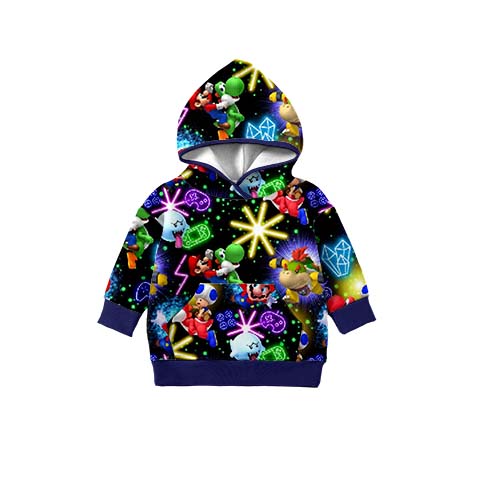
Many buyers completely confuse body measurements with garment dimensions. Expert sizing mechanics clearly distinguish between the two categories. The child's physical proportions represent the "Body" data. The dimensions of the hoodie laid flat represent the "Garment" data. A garment must always measure larger than the actual body. This allows for safe and comfortable movement.
To eliminate sizing guesswork, use the "Lay-Flat" comparison method. Take a currently well-fitting sweatshirt from your closet. Lay it completely flat on a hard table. Smooth out all the wrinkles. Take your measuring tape and record the following points:
Half-Chest: Locate the armhole seam. Drop down exactly 1 inch below this seam. Measure straight across the chest from left to right.
Body Length (HPS): Find the High Point Shoulder. This is the exact point where the neck seam meets the shoulder line. Measure straight down to the bottom hem.
Sleeve Length (CB): Locate the Center Back. This is the exact middle of the back neck seam. Measure across the shoulder and down the arm to the cuff edge.
This systematic approach builds ultimate purchasing trust. Vague brand sizing charts often mislead consumers. Matching your physical HPS and half-chest metrics to a brand's size chart drastically reduces sizing errors. You compare tangible, flat data. You completely bypass abstract age labels.
You must address how a kids Hoodie functions in real life. Children rarely wear these garments directly against their bare skin. They layer them over daily t-shirts. They wear them over bulky school uniforms. Sometimes they add thick thermal base layers. You need enough internal garment volume to accommodate these base layers comfortably.
Consider the visual aesthetics of a baggy versus a tailored fit. Sizing up certainly extends the garment's usable lifecycle. However, excessive sizing up creates real-world problems. The shoulder seams might droop too far down the arm. A baggy fit can hinder playground mobility. The child might require constantly rolled sleeves to play safely.
Next, you must evaluate fabric shrinkage risks. Check the care tag carefully before choosing a size. Fleece-lined cotton and polyester blends boast a very low shrink rate. They hold their intended shape quite well after multiple washes. Conversely, 100% cotton hoodies behave much differently.
Pure cotton garments will almost always shrink upon the first warm wash. They shrink even further during a high-heat dry cycle. Follow a strict buying rule here. Always size up if the product heavily features natural fibers. Apply this rule strictly if you rely on aggressive machine drying at home.
Brands rarely share a universal, standardized sizing block. You must constantly watch out for brand-to-brand discrepancies. A size 5 at a mall fast-fashion retailer often fits noticeably small. Meanwhile, a size 5 at a premium athletic or skatewear brand fits very differently. Skatewear brands tend to utilize an "oversized" streetwear block. They intentionally design their garments to look loose and relaxed.
If you shop globally, you need strict international conversion logic. Global sizing systems use entirely different scaling methods. Refer to this basic breakdown:
US: Usually labeled as 5T or Youth XS (Size 4/5).
UK: Typically labeled as 5-6 YRS. The UK groups ages in two-year increments.
EU (Centimeter-based): Usually corresponds to sizes 110 or 116. The European system bases sizes directly on the child's total height in centimeters. A size 110 fits a child up to 110cm tall.
Finally, recognize modern gender-neutral sizing norms. At age 5, standard outerwear remains almost entirely unisex. You will rarely find a structural fit difference between "boys" and "girls" blanks. Manufacturers use the exact same template. During this developmental stage, childhood body proportions remain largely identical across genders.
To secure the perfect fit, you must rely on a data-first approach. First, find the child’s exact physical height and weight. Next, cross-reference these precise numbers with the brand's specific sizing chart. If maximum longevity remains your main priority, lean toward Youth XS over 5T. This strategy gives the child a necessary growth buffer for the upcoming year.
Always take a brief moment to check the retailer's return policy. Many specialized brands offer free sizing exchange programs. This proves incredibly helpful when shopping for a customized or premium kids Hoodie. You secure total peace of mind while outfitting your growing child comfortably.
A: A 5-year-old rarely wears a Youth Small. That size usually targets ages 6 to 8. Most 5-year-olds fall squarely into either a 5T or a Youth Extra-Small (XS). A 5T suits shorter or average-height children. Youth XS provides better sleeve and torso length for taller kids.
A: The garment's flat chest measurement should be at least 3 to 4 inches larger than the child's actual physical chest circumference. This extra room ensures comfortable mobility. It allows the child to wear t-shirts or thermal layers underneath without the fabric pulling tightly across their shoulders.
A: Yes, manufacturers use entirely different sizing blocks. Toddler (T) sizes feature a slightly boxier, wider cut. This accommodates early childhood shapes and baby fat. Youth sizes transition to older children's proportions. They introduce longer torsos, straighter midsections, and noticeably longer limbs.


